


Geothermal Heating and Cooling Works in Harmony with the Earth
Geothermal Heat Pumps are self-contained units that efficiently heat and cool homes and commercial buildings while providing hot water. They use standard electronic thermostats and duct systems, making them appropriate for retrofits of standard heating, ventilation and air conditioning (HVAC) systems. Geothermal Heat Pumps can be sized to heat and cool any building in any climate.
Geothermal Heat Pumps quietly and reliably harness the renewable energy generated by the Sun that is stored in the ground near the Earth’s surface. They make significant contributions to a cleaner environment by saving energy, cutting fossil fuel use, and reducing carbon emissions.

The Earth is a Source of Heat During the Winter Months & Reject Heat During the Summer Months
During the summer months in cooling mode, unwanted heat indoors is transferred outside through the water in the pipes for cooling by the earth. The cool water is then circulated to the geothermal system indoors to provide efficient air conditioning. During the winter months, the process is reversed in heating mode. The earth heats the water circulating through the pipes, which is transferred to the geothermal system to provide indoor space heating. Hot water can also be provided for little or no additional monthly energy cost.

Ground Loops Connect Buildings to the Earth's Heat
Unlike conventional heating and air conditioning systems that use the outside air to absorb and release heat, Geothermal Heat Pumps transfer heat to and from the ground. They do that through closed loops of plastic pipes buried either horizontally or vertically in the ground below the frost line where the temperature is consistently between 40° to 80° F depending on where you live. These pipes are called ground loops, which are sealed tight and connected to the geothermal heating and cooling system inside the building. Water circulates through the piping allowing for heat transfer between the fluid and the earth.
Horizontal Loop

Vertical Loop

Used mainly when land area is limited in new construction or retrofit applications of existing homes. A drilling rig is used to bore holes at a depth of 150 to 250 feet per ton. A U-shaped coil of high-density pipe is inserted into the bore hole. The holes are then backfilled with a sealing solution.
Pond Loop

This loop style is an option if a large body of water is available within approximately 200 feet of the home. A ½ acre, 10 to 12-foot deep body of water is needed to support the average home. The system uses coils of pipe typically 300 to 500 feet in length. The coils are placed in and anchored just above the bottom of the body of water.
Open Loop
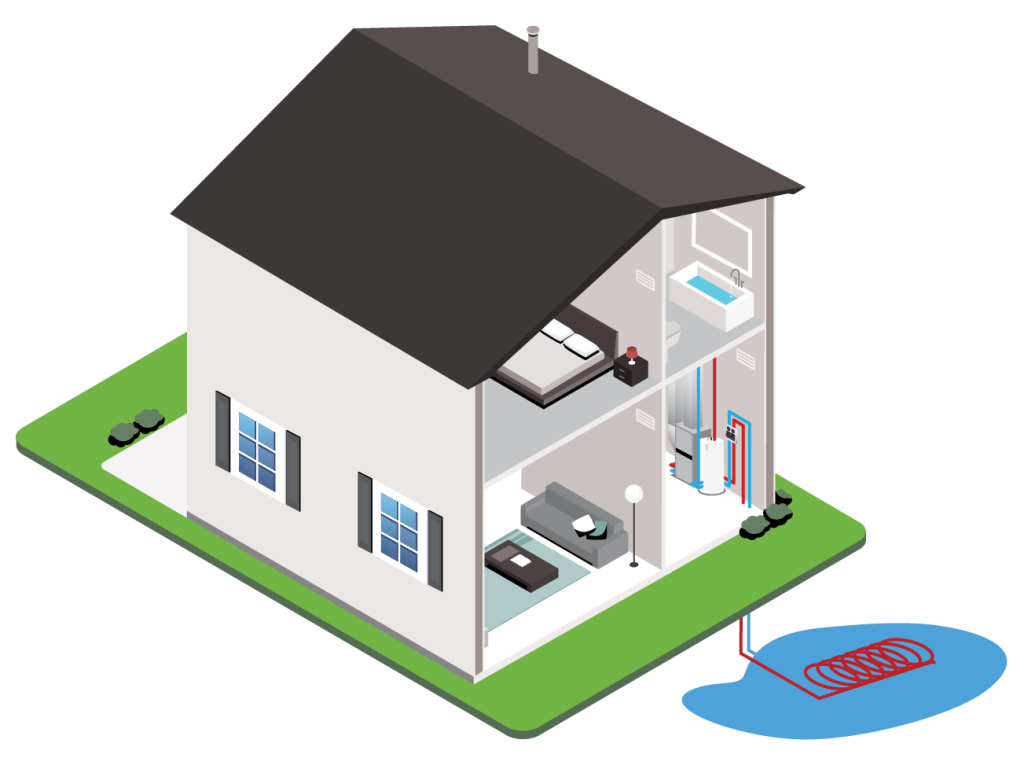
This loop type can be installed if an abundant supply of high-quality well water is available. A typical home will require a well producing 4 to 8 gallons of water per minute. A proper discharge area such as a river, drainage ditch, stream, pond, or lake must be present. Check for local restrictions before selecting a specific discharge method.
Geothermal Reduces Energy Use & Increases Savings in Buildings
Geothermal Heat Pumps effectively address one of the biggest consumers of U.S. energy — buildings. Buildings dominate our nation’s energy use, devouring over half of our electricity and natural gas. More than 70% of average energy demand for a typical single family home is to meet heating and cooling (thermal) needs. With a geothermal heat pump, that energy use can be cut by 40% to 70%, reaping significant savings on electricity and natural gas utility bills.
Residential Energy Use is Cut in Half Using a Geothermal Heat Pump
Conventional Heating and Air Conditioning

Over 70% of the energy consumed by a typical single-family detached home is used to meet thermal loads
Geothermal Heat Pump System

Total residential site energy consumption is cut in half
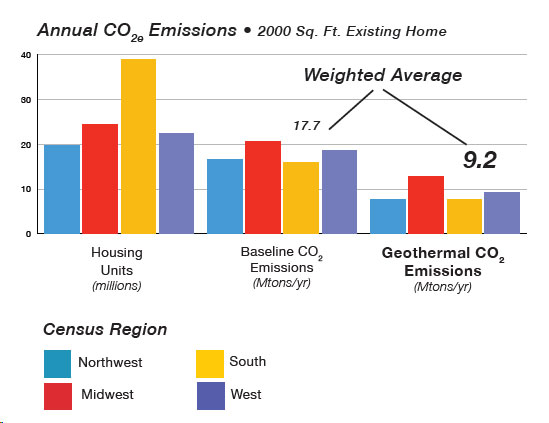
Geothermal Heat Pumps can cut carbon emissions from building energy use by 50%
Building energy use emits 43% of total U.S. carbon emissions.
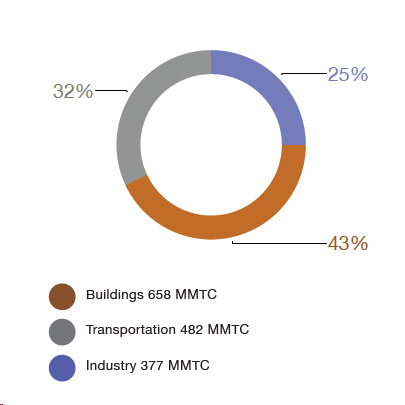
Geothermal Heat Pumps cut carbon emissions from buildings
Energy Savings Offer Fast Payback of Installation Costs
Though there is a higher “first cost” for Geothermal Heat Pump systems associated with excavation or drilling for installation of ground loops, energy savings can quickly make up the difference in system cost compared to installation of conventional systems. Energy savings “payback” for typical residential Geothermal Heat Pump installations compared to standard heating and air conditioning equipment is usually 4 to 7 years, and even less time than that with federal, state and utility rebates.
Geothermal Heat Pumps are Made in the USA
Geothermal Heat Pumps are manufactured right here in the United States, with American labor and parts, and that spells JOBS. From innovative manufacturing through system design, systems for residential and commercial use are distributed and installed with local labor, creating an engine for economic growth. Geothermal systems spur the creation of skilled, well-paid jobs across the nation everywhere they are installed. Thousands of jobs can be created with increased deployment of Geothermal Heat Pumps.
Geothermal Heat Pumps Can Be Deployed Everywhere
Geothermal Heat Pumps harness on-site renewable energy from the Earth and are a readily available technology that can be used everywhere. Geothermal Heat Pumps are truly a “50-State” renewable technology that provide large energy savings and complementary environmental benefits to both new building construction and retrofits for older structures.